
Blog
How Much Does a Yurt Cost? What Actually Drives the Price
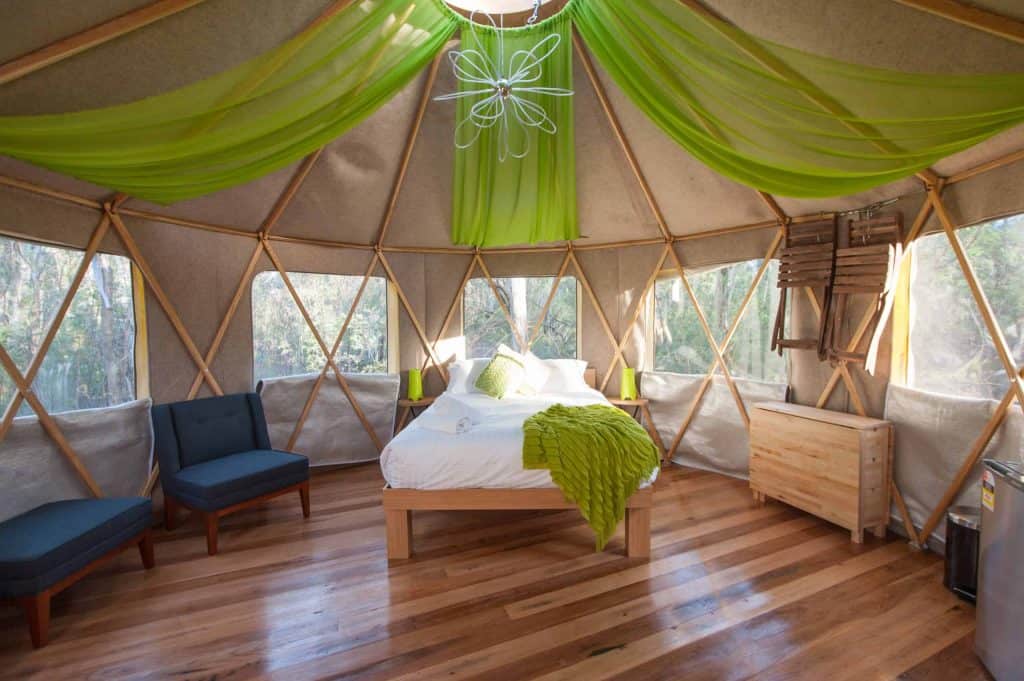
If you’ve started researching the cost of buying a yurt, you’ve probably noticed the numbers vary greatly from one source to the next. That’s partially because the word “yurt” covers many different structures, from imported traditional canvas gers to modern vinyl “shed” kits to handcrafted, purpose-built shelters.
Yurta yurts, made by hand for two decades in Ontario, are priced based on two model sizes and any added options. Options drive the line item price, but the yurt and the materials it chooses to use – and chooses to avoid – are what actually determine the cost of a yurt over time. Here’s what drives that number, and how to get an accurate estimate for your build.
How Much Does a Yurt Cost? The Short Answer
Yurta doesn’t publish one flat number that fits every buyer, since the total depends on your model and the options you choose. Every model includes the frame, the operable dome, a solid cedar door, and a 2-year parts and labour warranty (see the full list below). From there, most buyers add insulation and, depending on their needs, additional windows or options like a round floor. For a real number that suits you, the best route is a direct quote; we are happy to discuss options thoroughly, including shipping, with no pressure.
What’s Included With Every Yurta
Regardless of size, every one of our yurts ships with the same standard feature set. The base build of every Yurta includes:
- A handcrafted frame built from knot-free white ash hardwood, machined and hand-selected in Ontario
- An acrylic-coated breathable fabric roof and wall cover that is non-toxic – never vinyl, never PVC
- Large multi-function windows with built-in awnings and cold weather covers
- An operable 48-inch skylight and dome for ventilation
- A solid knot-free cedar door
- Round floor plans so that you can build your own platform from day one
- A 2-year parts and labour warranty, plus lifetime, at-cost replacement parts for original owners
Insulation and a turnkey floor are options you can add to your build. Yurta is flexible enough to suit freestanding direct-to-soil installations. Insulation is an option the vast majority of clients select because even for three-season setups, the radiant layer does a lot to reduce summer heat gain in the yurt. However, each site and use is specific, and Yurta can be even customized beyond the basic package. See this collection of totally custom Yurta we have made over the years. And call us if you have a special project that needs a special yurt!
Yurta 17 (226 sq ft)
The Yurta 17 is the essence of minimal footprint. At 17 feet across, it’s the most popular model, and ideal for solo use, couples or small families. Its smallest configuration is compact enough to pack into a car like a Pontiac Vibe or Toyota Matrix. However, our pickup instructions still recommend bringing a pickup truck or cargo van for convenience. On a prepared platform, setup time is roughly 2 to 4 hours with two people, using no nails or screws. Striking the yurt requires the same effort.
Yurta 21 (346 sq ft)
The Yurta 21 is a semi-permanent structure with hardwood lumber rivalling the dimensions found in the framing of a house. At 21 feet across, it is built for families and groups that need more room to spread out. With two or more people on a prepared platform, it takes about 4 to 7 hours to set up, without driving a single screw or nail into the structure itself.
What Actually Drives the Price Up or Down
A few variables move the number for any given build:
- Diameter. The Yurta 21 covers roughly 120 more square feet than the Yurta 17. The structure is about three times the dimensions and weight, which means more hardwood, more fabric, and more labour.
- Insulation. Yurta’s unique radiant wool felt is the one option most people make standard. It serves double duty through all seasons, helping retain winter warmth and repel the sun’s heat, which makes it a typical, though not necessary, add-on.
- Customisation. Extra windows with custom placements, floor kits, decks, and finishing touches are all optional add-ons on top of the base structure.
The quality baseline doesn’t change with size: both models use the same hardwood, breathable cover, and construction philosophy.
Comparing Yurta Pricing with Other Yurts
Not all “yurts” are made from comparable materials, so comparing sticker prices alone means comparing two different products that happen to share the same name. Inexpensive yurt kits tend to use vinyl or PVC covers. Modern yurts almost universally use bubble-wrap insulation, which is cheaper, non-breathable and offers primarily radiant insulation. These materials are cheaper and easier to source than the alternatives. Traditional Mongolian yurts use real wool to insulate their Gers, but this coarse natural version offers no radiant insulation.
Yurta’s wool felt, for example, \is made of 100% sheep’s wool and is custom needled to a reflective layer, combining thermal and radiant capacity into one effective, lightweight, breathable insulation that cannot be found anywhere else. Synthetic fabrics still continue to copy real wool fibre’s natural self-extinguishing characteristics, and performanceYurta builds differently. This uncompromising approach is designed to reduce the risk of hidden mould caused by trapped moisture, though moisture control in any structure also depends on ventilation, construction quality, and upkeep. For a deeper dive, watch this video on our YouTube page about the importance of breathability in yurts.
Add-Ons and Customization
Yurta offers options like additional insulation, extra windows, and floor or platform kits. Current pricing for each option is kept on our order forms and pricing page rather than here. Check the Yurta 17 pricing sheet or visit Yurta’s pricing page for the full, current list for either model.
Shipping, Taxes, and Payment Terms
Shipping and pickup. Yurta offers free local pickup at its Ontario workshop, with help packing the yurt into your vehicle, and ships internationally. Confirm current shipping terms and any fees directly, since these details can change from day to day.
If you’re ordering from the United States, budget separately for possible customs clearance or duties, since these fall outside Yurta’s control. As of this writing, no duties are collected on Yurta models because they are made locally from locally sourced materials. However, hiring an agent to broker the yurt into the country legally will cost a few hundred dollars. If you carry your yurt across the border instead, no additional brokerage fees or duties apply.
Taxes. Applicable sales tax is added to the listed price, so confirm this when you get your quote.
Payment terms. Yurta’s published terms call for a 30% deposit at the time of order, with the balance due at pickup. Yurta is made to order, though stock is sometimes available. Delivery times vary through the year and are typically 6-8 weeks.
Yurt vs. Tiny Home Cost (and Cabins)
A yurt can avoid some cost categories that a conventional cabin, bunkie, or factory-built tiny home typically carries, such as a poured foundation, and in some municipalities, a building permit (see below). Site preparation, a platform, and utility hookups are still common costs, and how much you actually save depends heavily on your site and local rules. In general, though, staying closer to a true tent than a small house means less site work than a permanent structure needs.
The Hidden Cost of a “Cheap” Yurt
This is the side of the cost of buying a yurt that a sticker-price comparison won’t show you: the cheapest yurt on the market is rarely the cheapest yurt to own. Traditional yurts are usually made overseas for a fraction of the cost of local employment, with materials not designed for our humid climate. The industry’s near-universal modern yurt alternative, which Yurta affectionately calls the “McYurt,” is a shelter wrapped in vinyl, insulated with bubble wrap, and dressed up with house parts like steel doors and rigid partitions. These yurts may look like a good deal on day one. Years later, moving or setting up a modern yurt can be daunting enough to limit its adaptability to your changing life. Traditional yurts will move more easily, if their materials survive. Based on Yurta’s experience, typical cotton canvas covers need replacing as soon as after five years of steady exposure. Yurta’s acrylic-coated fabric, by contrast, can be re-coated at home for about $100 and a morning’s work, extending its life to a decade or more.
Modern yurts also create hidden cavities of impermeable bubble wrap and vinyl, out of the sight and reach of regular inspection. Everyday occupant moisture from breathing and cooking has no way to escape, and this can show up as hidden mould behind the insulation. When it does, the “savings” can end up going toward replacement covers, torn-out insulation, or in worse cases, a full teardown.
Ongoing Costs After You Buy
- Replacement parts: Yurta’s current terms give original owners at-cost replacement parts for life on frame pieces, hardware, and cover sections.
- Fabric lifespan: The outer cover typically lasts about a decade before it needs replacing. The hardwood frame, dome, ring, and wool felt insulation are built to last a lifetime with normal care.
- Re-coating the roof: about $100 in materials and a morning’s work, done between years 5-8 to extend the outer cover’s life.
Heating: Wood Stoves and Chimney Kits
Yurta doesn’t sell wood stoves; you source them locally to fit your space and preferences. It’s still a real cost worth budgeting for if you plan to run your four-season yurt through winter, along with a proper chimney installation. Yurta’s design vents the chimney straight up through the roof rather than out the wall, which keeps the stove burning more efficiently.
Do You Need a Permit?
For most buyers, the honest answer is that it adds nothing to the cost of buying a yurt. Under the Ontario Building Code, a tent is exempt from both a building permit and the Code itself, as long as it meets three conditions: it covers no more than 60 square metres (about 645 square feet), it isn’t attached to a building, and it sits more than 3 metres from other structures. That exemption is specific to the Building Code, though; other municipal rules, like zoning, can still apply, so it’s worth checking locally.
Code also exempts low, uncovered platforms at or under about 600 mm (roughly 24 inches) off the ground, which can clear a second common hurdle, though exact thresholds and definitions may vary by municipality. For our complete perspective, including how to talk to your local township, read A True Yurt Shouldn’t Need a Building Permit.
Frequently Asked Questions About Yurt Costs
Are There Hidden Costs When Buying a Yurt?
There are no hidden costs of any kind. Add-ons like insulation and flooring are priced separately from the base build, and shipping and tax are calculated on top. For the full current picture, we can provide an itemized quote before you order.
How Much Does Shipping a Yurt Actually Cost?
Local pickup at the Ontario workshop is free. Shipping costs depend on your destination and whether the yurt needs to be crated, so get a specific figure as part of your quote. Cross-border orders may also involve customs clearance or duties.
Is a Cheaper Yurt Actually a Worse Deal in the Long Run?
Often, yes. A budget yurt can cost less upfront, but lifespans can vary widely. As “the devil is in the details”, the imprecise fit and finish of budget yurts can create failure points that lead to ongoing problems. The same is true for cheap but common materials that aren’t suited to North American use or are problematic as tent materials. The result can be constant maintenance, custom layers under the cover, premature cover degradation, damage to the insulation, and more. While no structure is immune to aging, a knot-free hardwood structure, luxurious wool felt with radiant capacity, and a non-toxic, breathable outer shell create durable materials that are easy to repair or renew.
What’s the Price Difference Between the Yurta 17 and Yurta 21?
The Yurta 21 is six times larger than the Yurta 17 and offers more floor space for larger groups (346 sq ft versus 226 sq ft), so it naturally costs more. At the time of writing, an insulated Yurta 17 starts at $18,500 CAD and a comparable Yurta 21 is $29,000 CAD. The exact gap depends on the options; current pricing for both models can be viewed on our Pricing page or confirmed by calling us at 1-877-807-5008.
How Much Does It Cost to Heat a Yurt Through Winter?
Beyond the insulation package itself, expect to budget for a wood stove and a code-compliant chimney installation. Firewood costs vary by region and how many months you’re heating through. The amount of firewood required depends on the wood species and the stove’s efficiency.
Is a Yurt a Good Investment for Short-Term Rental Income?
A yurt can cost less to set up than a conventional guest cabin because it may avoid foundation work and, in some municipalities, traditional permit fees, which, along with the typical complexities of building a cabin, are among the highest costs in standard construction. Actual savings depend on your site and location. Because a Yurt is an exceptionally minimal structure that connects users to the outdoors, the quality of your setting is unavoidable. In the right place with the right management, some of our clients have been cash-positive in the first year.
Getting an Accurate Quote for Your Yurt
The figures in this article describe what drives cost up or down, not a fixed price, since Yurta’s current, published pricing is the only reliable source for an exact total. The fastest way to get a real number is to talk it through directly.
Ready to get started?
- Free Consultation Call: talk through sizing, options, and timeline with the team that builds every yurt by hand
- Request a Custom Quote: get an itemized price for your exact configuration
Yurta builds a limited number of four-season yurts every year, and production slots can fill up before winter. If you’re planning a build for next year, the earlier you call, the more choice you’ll have.